


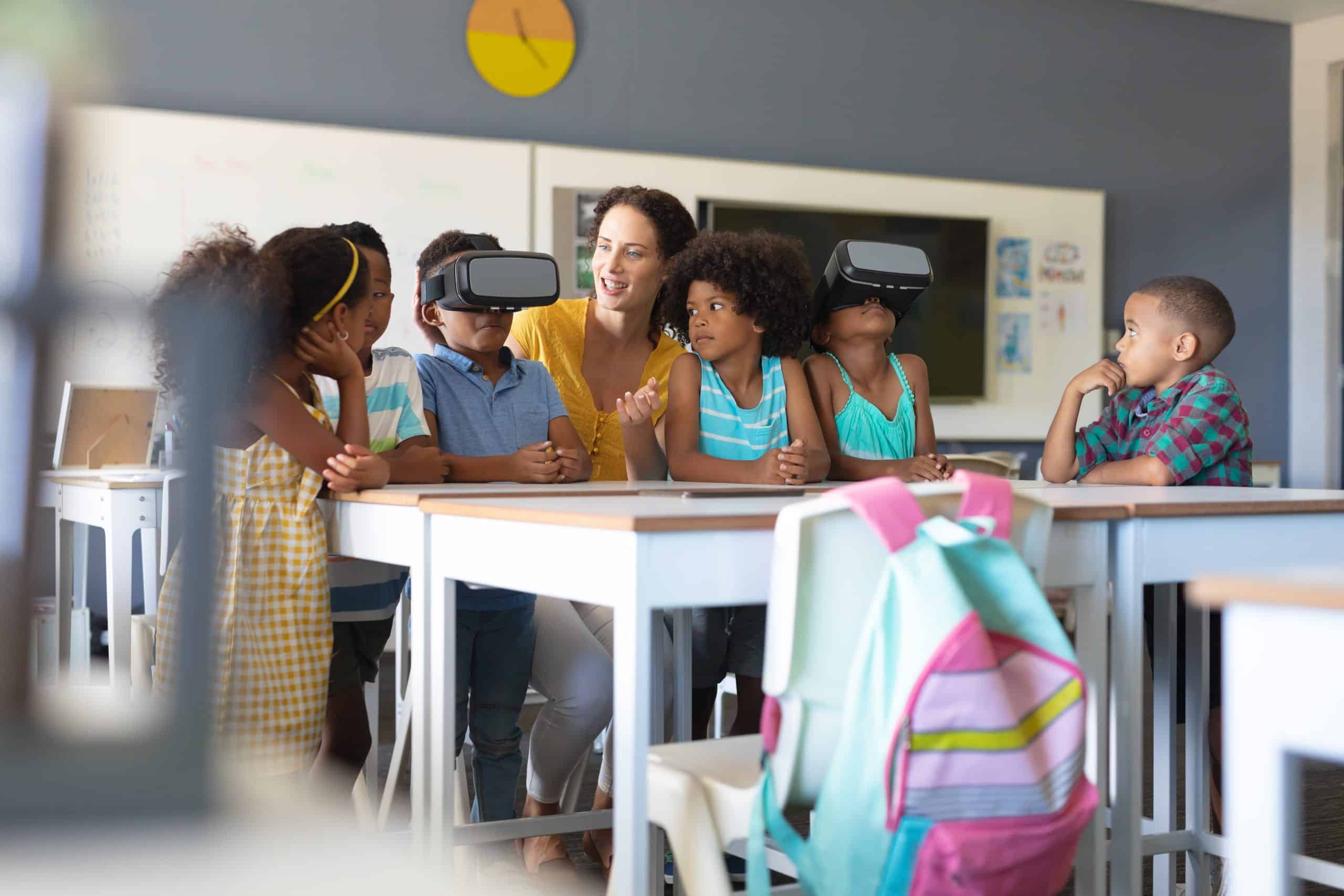
Augmented Reality (AR) is transforming the educational landscape by introducing interactive and immersive learning experiences that were previously unimaginable. By overlaying digital information onto the real world, AR enhances the way educators teach and students learn, making educational content more engaging and accessible. This article explores how AR is being integrated into education, its benefits, and the challenges it faces, offering a glimpse into the future of this innovative learning paradigm.
Revolutionizing Learning through AR
AR brings abstract concepts to life, allowing students to visualize and interact with information in ways that deepen understanding and retention. This technology can overlay text, images, and videos onto classroom materials, making lessons more engaging and interactive. From elementary schools to universities, AR is opening up new possibilities across all levels of education.
- Interactive Lessons and Demonstrations
AR can turn traditional lectures into dynamic experiences. For example, in a science class, students can use AR to view 3D models of human anatomy or to simulate chemical reactions. This hands-on approach not only makes learning more engaging but also helps students better understand complex concepts by visualizing them in real-time and in three dimensions.
- Field Trips and Virtual Tours
AR enables educational institutions to conduct virtual field trips to museums, historical sites, and even other planets. Students can explore ancient ruins or walk on Mars without leaving the classroom. This not only makes learning more exciting but also eliminates geographical and financial barriers to such experiences.
- Language Learning and Cultural Immersion
AR apps can assist in language learning by providing real-time translations or vocabulary annotations during conversations. Additionally, AR can offer cultural immersion experiences, where students can explore foreign cities and learn about their history, landmarks, and culture through augmented content.
Empowering Teachers with AR Tools
AR also provides teachers with tools to create more personalized and adaptive learning experiences. Educators can design their AR content that tailors lessons to the needs of individual students, providing a more inclusive learning environment that accommodates various learning styles and paces.
- Customizable Content
Teachers can create AR experiences that align with their curriculum, adjusting the complexity and presentation of information based on the class’s needs. This flexibility enables educators to cater to diverse learning preferences and enhance understanding across the board.
- Real-Time Assessment and Feedback
AR technologies can track how students interact with AR content, providing teachers with instant feedback on students’ understanding and engagement. This information can be used to adjust lessons in real-time and improve educational outcomes.
Challenges of Integrating AR in Education
Despite its potential, several challenges need to be addressed to fully integrate AR into educational settings:
- Technological and Financial Barriers
The widespread adoption of AR in education is hindered by the cost of AR devices and the need for robust digital infrastructure in schools. While mobile devices are increasingly used to deliver AR experiences, the best immersive experiences often require more sophisticated equipment.
- Curriculum Integration
Incorporating AR into existing curricula can be challenging for educators who are not familiar with the technology. Training teachers and developing suitable content takes time and resources, which can slow down the implementation process.
- Equity and Accessibility
There is a risk that AR could widen the digital divide if not implemented thoughtfully. Ensuring that all students have access to the necessary technology is crucial for equitable education.
The Future of AR in Education
The future of AR in education is promising, with ongoing advances in technology making AR more accessible and effective. Here’s what the future might hold:
- Greater Integration with AI and Machine Learning
Combining AR with AI and machine learning could lead to adaptive learning environments that customize educational experiences automatically based on student performance and engagement.
- Expansion Beyond Traditional Classrooms
AR could extend its reach beyond formal education settings, providing lifelong learning opportunities in informal environments. Museums, parks, and city streets could all become learning environments enriched with AR.
- Enhanced Collaborative Learning
Future developments in AR could enable more sophisticated collaborative and social learning experiences, where students can work together with peers from around the world in a shared augmented space.
Conclusion
Augmented Reality is setting the stage for a major transformation in educational practices. By making learning more interactive, engaging, and personalized, AR has the potential to significantly enhance educational outcomes. While there are challenges to its widespread adoption, the continued technological advancements and decreasing costs of AR devices suggest that AR will be an increasingly common feature in classrooms of the future. As this technology develops, it holds the promise of making learning a more dynamic, accessible, and enjoyable experience for students everywhere.

